


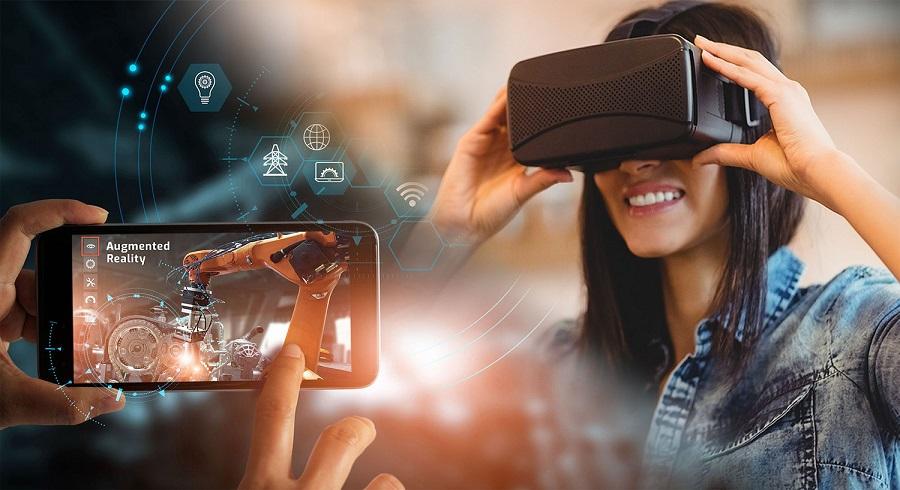
As the broader immersive technology market surges towards its projected $299.99 billion valuation by 2035, a number of key virtual reality trends are shaping the future of digital immersion and contributing significantly to the overall ecosystem's 18.9% CAGR. While augmented reality blends the digital and physical, virtual reality's focus on creating complete, convincing, and interactive simulated worlds is unlocking powerful new possibilities. These trends are moving the technology beyond its gaming-centric roots into a versatile platform for social interaction, professional training, and creative expression. From wireless freedom to photorealistic avatars, these developments are making VR more accessible, more believable, and more valuable than ever before, paving the way for its mainstream adoption and solidifying its role in the future of computing.
One of the most significant trends is the definitive shift towards standalone, wireless headsets. Early VR systems required a powerful PC and a cumbersome tether, which limited freedom of movement and created a high barrier to entry. The success of devices like the Meta Quest has proven that consumers and businesses overwhelmingly prefer the convenience and immersion of an untethered, all-in-one device. This trend is driving innovation in mobile processing chips, battery technology, and inside-out tracking systems that don't require external sensors. The move to standalone VR is the single biggest factor in making the technology more accessible and user-friendly, dramatically expanding the potential market and paving the way for mass-market adoption outside of a niche enthusiast audience.
Another crucial trend is the relentless pursuit of social presence and realism. The ultimate goal of social VR is to make users feel as if they are truly in the same room as others, regardless of their physical location. This is being advanced through the development of hyper-realistic, AI-driven avatars that can replicate a user's real-time facial expressions and body language. Advanced eye-tracking technology is a key enabler, allowing for natural eye contact between avatars, which is critical for believable social interaction. Combined with spatial audio that makes voices sound like they are coming from a specific direction, these technologies are closing the gap between virtual and real-life communication, making VR a powerful platform for remote work, social gatherings, and virtual events.
Finally, there is a major trend toward using VR for serious applications beyond gaming. The enterprise training market is a massive growth area, with companies using VR to simulate complex, dangerous, or expensive-to-replicate scenarios for their employees, from surgical procedures to operating heavy machinery. The benefits in terms of safety, cost-effectiveness, and knowledge retention are enormous. In the field of mental health, VR is being used for exposure therapy to treat anxiety and phobias. In design and engineering, VR allows teams to collaboratively interact with full-scale digital prototypes of cars, buildings, and products. This expansion into high-value professional and therapeutic use cases is a key driver of the market's long-term growth, demonstrating that VR is not just a toy but a powerful tool for work and well-being.
Explore More Like This in Our Regional Reports:
Europe Digital Paper System Market

 Arabic
 French
 Spanish
 Portuguese
 Deutsch
 Turkish
 Dutch
Dutch
 Italiano
 Russian
 Romaian
 Portuguese (Brazil)
 Tiếng Việt