


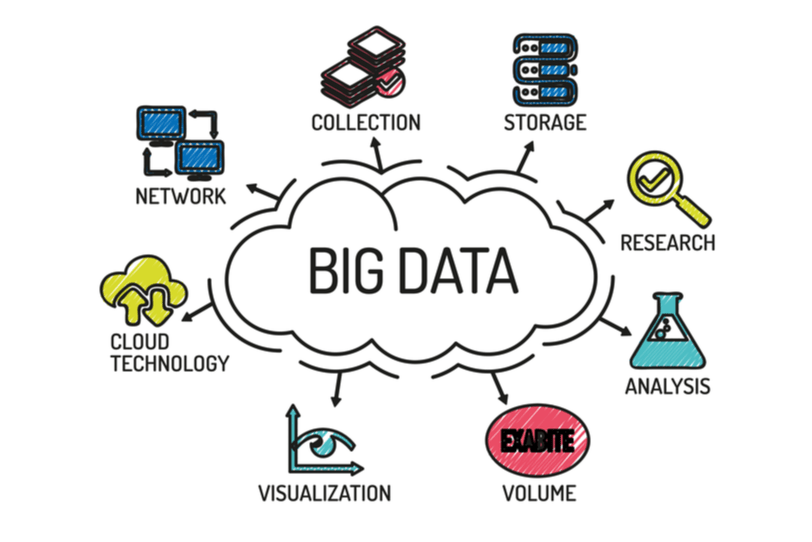
The Internet of Things (IoT) represents one of the most significant and rapidly growing sources of information, acting as a powerful multiplier for the global data market size. IoT consists of a vast network of interconnected physical devices—from smart home appliances and wearable fitness trackers to industrial sensors and connected vehicles—each equipped with sensors that collect and transmit data about their environment or operational state. This relentless, machine-generated data stream is fundamentally different from traditional, human-generated data in its sheer volume, velocity, and variety. The continuous flow of real-time information from billions of devices presents both a monumental challenge and an unprecedented opportunity. Organizations that can effectively capture, process, and analyze this IoT data can gain deep insights into their operations, customer behavior, and the physical world, enabling transformative applications like predictive maintenance, smart city management, and real-time supply chain visibility. The data market size size is projected to grow USD 249.91 Billion by 2035, exhibiting a CAGR of 10.58% during the forecast period 2025-2035. A substantial driver of this growth is the relentless expansion of the IoT, which is turning the physical world into a vast, queryable information system.
The key players in the data market are aggressively building out their capabilities to handle the unique demands of IoT data. Cloud giants like AWS, Microsoft Azure, and Google Cloud offer dedicated IoT platforms (e.g., AWS IoT Core, Azure IoT Hub) that provide services for device connectivity, management, data ingestion, and analytics. These platforms are crucial for aggregating and processing data from millions of distributed devices. Industrial technology leaders like Siemens and General Electric (GE) have also become major players by developing their own IoT platforms (e.g., Siemens' MindSphere) tailored for industrial applications, combining their deep domain expertise with data analytics. Regionally, the adoption of IoT varies by application. In North America and Europe, industrial IoT (IIoT) is a major focus, with manufacturing, logistics, and utilities sectors leveraging sensor data to create smart factories and grids. In the APAC region, consumer IoT and smart city initiatives are driving massive data growth. Countries like China are deploying large-scale IoT networks for urban management, traffic control, and environmental monitoring. South America is seeing growth in agricultural IoT for optimizing crop yields, while the MEA region is investing in IoT for smart building management and energy grid optimization.
The future of the data market, as shaped by IoT, will be characterized by the rise of edge and fog computing. Given the immense volume and real-time nature of IoT data, sending all of it to a centralized cloud for processing is often impractical due to latency, bandwidth costs, and privacy concerns. Edge computing addresses this by performing data processing and analysis directly on or near the IoT device itself. Fog computing acts as an intermediate layer between the edge and the cloud. This decentralized approach is essential for applications requiring near-instantaneous response times, such as autonomous driving or robotics control in a factory. Another major future trend is the convergence of AI and IoT (AIoT), where machine learning algorithms are deployed at the edge to enable intelligent devices that can make autonomous decisions without human intervention. This will lead to more sophisticated applications, such as quality control systems that can detect and discard defective products on the assembly line in real-time. Furthermore, the development of 5G networks will be a critical enabler, providing the high-bandwidth, low-latency connectivity required to support massive IoT deployments.
In summary, the key takeaways regarding IoT's impact are clear. First, IoT is a primary catalyst for data volume growth, generating massive, real-time data streams that are a treasure trove of potential insights. Second, the market is served by both horizontal cloud platforms from tech giants and specialized vertical platforms from industrial leaders who understand the specific context of the data. Third, regional IoT adoption is diverse, spanning industrial applications in the West and massive smart city and consumer projects in the East. Finally, the future will be defined by a shift towards decentralized processing through edge and fog computing, the powerful synergy of AIoT, and the enabling connectivity of 5G networks. The data market size size is projected to grow USD 249.91 Billion by 2035, exhibiting a CAGR of 10.58% during the forecast period 2025-2035, with the unstoppable proliferation of connected devices serving as a primary engine of this expansion.
Explore More Like This in Our Regional Reports:
GCC Cloud Infrastructure Services Market

 Arabic
 French
 Spanish
 Portuguese
 Deutsch
 Turkish
 Dutch
Dutch
 Italiano
 Russian
 Romaian
 Portuguese (Brazil)
 Tiếng Việt