


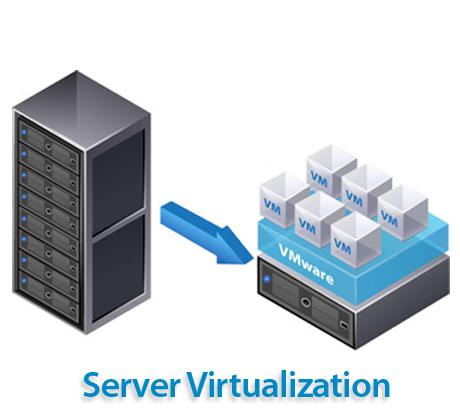
The Server Virtualization Market Forecast for the next decade indicates a future of steady evolution rather than radical disruption, with the technology solidifying its role as the indispensable bedrock of modern IT. As a mature market, it is not expected to see the explosive growth rates of emerging technologies, but its foundational importance ensures consistent and predictable expansion. The financial projections reflect this stability and enduring relevance. Industry analysis shows the Server Virtualization Market is Estimated to Grow USD 14.57 Billion by 2035, Reaching at a CAGR of 4.43% During 2025 - 2035. This forecast is built upon the assumption that while new technologies will emerge, they will largely be integrated with or built upon virtualization, which will continue to provide the core abstraction, isolation, and management capabilities that data centers require.
Looking toward 2035, the forecast shows a clear technological evolution where virtualization and containerization become deeply intertwined. The debate of "VMs vs. Containers" will become obsolete, as leading platforms will seamlessly manage both constructs as first-class citizens. The future data center will run a mix of workloads: legacy monolithic applications in traditional VMs, and modern microservices-based applications in containers, often with those containers running inside lightweight VMs for enhanced security and isolation. Hypervisors will become even more lightweight and optimized, and management platforms will provide a single, unified experience for deploying, monitoring, and securing both virtual machines and container clusters. This convergence is the most significant technological shift anticipated in the forecast period.
The market forecast also anticipates a geographic shift in growth drivers. While North America and Europe will remain the largest markets in terms of absolute revenue, the highest growth rates will come from emerging economies in the Asia-Pacific, Latin America, and Africa. As these regions accelerate their digital transformation journeys, they will be building out new data center infrastructure and leapfrogging some legacy technologies. Server virtualization will be a day-one decision for these new builds, allowing them to achieve modern levels of efficiency and agility from the outset. This "greenfield" opportunity in developing markets will be a primary engine of global market growth, offsetting the more modest, optimization-focused growth in mature markets.
In conclusion, the long-range forecast for the server virtualization market is one of enduring relevance and adaptation. The technology will not be replaced but will instead absorb and adapt to new paradigms like containerization, edge computing, and AIOps. It will remain the fundamental layer that enables private and hybrid clouds, provides unparalleled disaster recovery capabilities, and gives IT departments the flexibility to support the business. The role of the hypervisor may become more invisible, embedded deeply within hyper-converged and cloud management platforms, but its function as the core engine of the software-defined data center will be more critical than ever. The market's steady growth is a direct reflection of this timeless and indispensable role in the world of enterprise IT.
Explore More Like This in Our Regional Reports:
South Korea Digital Storage Devices Market Size

 Arabic
 French
 Spanish
 Portuguese
 Deutsch
 Turkish
 Dutch
Dutch
 Italiano
 Russian
 Romaian
 Portuguese (Brazil)
 Tiếng Việt