


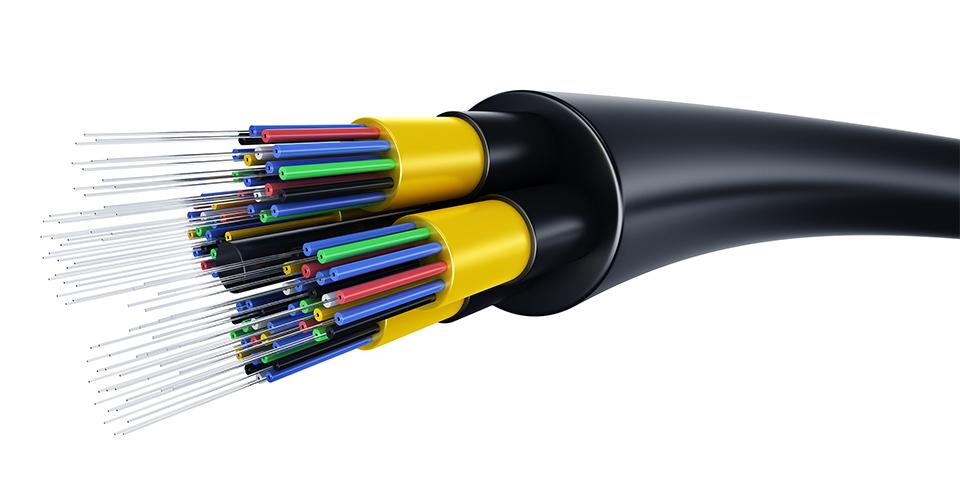
In an era defined by instant connectivity and data-driven processes, the technology facilitating this digital revolution often remains invisible to the end-user. At the heart of our global communication network lies the Fiber Optic Cable, a marvel of modern engineering that transmits information at the speed of light. Unlike traditional copper wires that carry data using electrical signals, these advanced cables use pulses of light traveling through incredibly thin strands of purified glass or plastic, known as optical fibers. Each strand, often no thicker than a human hair, can carry vast amounts of data over immense distances with minimal signal loss. This fundamental difference in transmission medium is what gives fiber optics their extraordinary capacity and speed, making them the preferred choice for building the high-performance backbones of the internet, telecommunication networks, and massive data centers that power our interconnected world, from streaming high-definition content to enabling real-time global financial transactions.
The advantages of fiber optic cables over their traditional copper counterparts are numerous and substantial, driving their widespread adoption across various industries. The most significant benefit is bandwidth. A single optical fiber can carry thousands of times more information than a copper wire of the same diameter, accommodating the exponential growth in data traffic fueled by video streaming, cloud computing, and the Internet of Things (IoT). Speed is another critical factor; since data travels as light, it approaches the ultimate physical speed limit, resulting in lower latency and faster downloads. Fiber Optic Cable Market is likely to Reach from USD 18.41 Billion to 65.31 Billion by 2035, Growing at a CAGR of 13.5% During the Forecast Period 2025 - 2035. Furthermore, fiber optic signals are immune to electromagnetic interference (EMI), which plagues copper cables, ensuring a cleaner, more reliable signal. They are also more secure, as tapping into a fiber cable without being detected is extremely difficult, making them ideal for sensitive government and corporate communications.
Structurally, a fiber optic cable is a multi-layered system designed to protect the delicate optical fibers within. At the very center is the core, the microscopic glass strand that carries the light signal. Surrounding the core is the cladding, another layer of glass with a different refractive index that reflects light back into the core, preventing signal loss through a principle called total internal reflection. These are then covered by a buffer coating, a plastic layer that protects the fiber from moisture and physical damage. Multiple fibers are often bundled together within a cable, which is then reinforced with strength members and enclosed in a durable outer jacket. Cables are broadly categorized into two types: single-mode and multi-mode. Single-mode fiber has a very narrow core and is used for long-distance, high-bandwidth applications like transoceanic cables, while multi-mode fiber has a larger core and is used for shorter distances, such as within a building or a data center campus.
The applications of this transformative technology are vast and continue to expand. In telecommunications, fiber optics form the backbone of long-haul networks and are increasingly being used for "last-mile" connections directly to homes and businesses in Fiber-to-the-x (FTTx) deployments. Data centers rely on high-density fiber optic cabling for rapid interconnectivity between servers and storage arrays, forming the central nervous system of the cloud. The medical field utilizes fiber optics in endoscopic instruments for minimally invasive surgery and diagnostic imaging. The military and aerospace industries depend on fiber for secure, lightweight, and high-speed communication systems in aircraft and tactical networks. Even industrial sectors use fiber for sensing temperature, pressure, and strain in harsh environments where traditional electronic sensors would fail. As our world becomes more data-centric, the role of fiber optic technology as the fundamental enabler of progress will only continue to grow.
Explore Our Latest Trending Reports:

 English
 Arabic
 French
 Spanish
 Portuguese
 Deutsch
 Turkish
 Dutch
Dutch
 Italiano
 Russian
 Romaian
 Portuguese (Brazil)